The dawn of a new era in manufacturing is upon us. The integration of industrial robotics with 5G connectivity is not just a technological advancement; it’s a revolution that promises to redefine the entire landscape of manufacturing. Imagine a factory floor where machines communicate seamlessly, processes are optimized in real-time, and production lines operate with unprecedented efficiency. This is the future we are stepping into, and it’s happening right now. 🤖🚀
At the heart of this transformation is the powerful synergy between industrial robotics and 5G technology. Robotics, with its precision and consistency, has already established itself as a cornerstone in modern manufacturing. However, its full potential is unlocked when paired with the ultra-fast, low-latency capabilities of 5G networks. Together, they are setting the stage for a smart manufacturing environment that is more agile, efficient, and responsive than ever before.
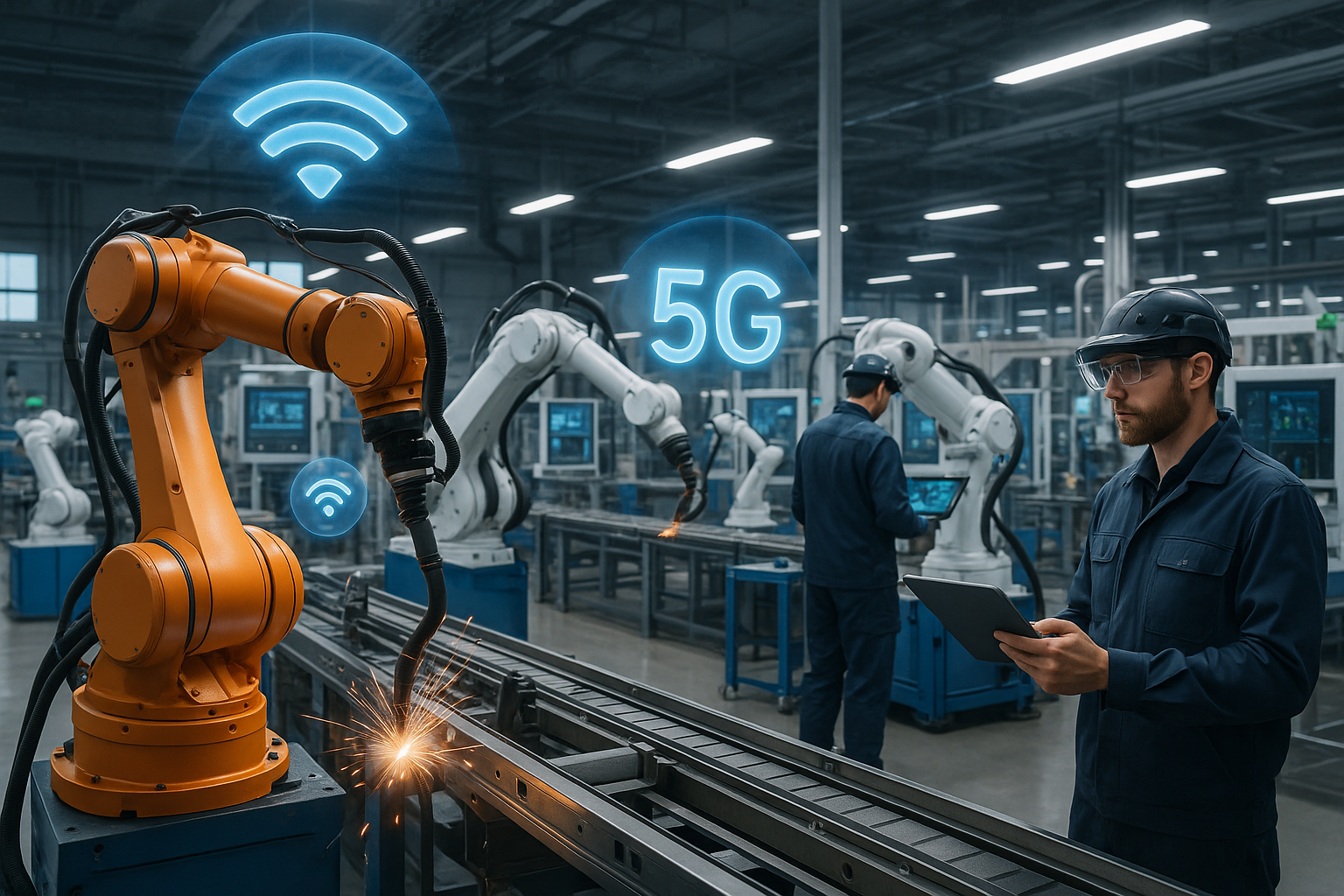
The potential benefits of this integration are vast. First, there is the promise of enhanced productivity. With 5G-enabled robotics, manufacturers can achieve faster data transmission and real-time monitoring, leading to significant reductions in downtime and waste. Imagine a scenario where a robotic arm detects a defect and immediately communicates with the entire production line to adjust the process, all in the blink of an eye. This kind of responsiveness is only possible with the speed and reliability of 5G.
Furthermore, the combination of robotics and 5G opens up new possibilities for remote operations. Factory managers and technicians can monitor and control machinery from anywhere in the world, breaking geographical barriers and allowing for unprecedented levels of flexibility and scalability. This is particularly beneficial in today’s globalized market, where demand can fluctuate rapidly, and the ability to adapt is crucial.
Safety is another critical area where 5G-connected robotics can make a significant impact. By enabling more precise control and monitoring, these systems can help reduce the risk of accidents on the factory floor. Robots can handle dangerous tasks with greater precision, while human workers can focus on supervisory roles, minimizing their exposure to hazardous conditions.
But how exactly does 5G connectivity enhance the capabilities of industrial robots? The key lies in the features that 5G brings to the table: ultra-low latency, high bandwidth, and massive device connectivity. These characteristics allow robots to communicate and collaborate in real-time, making split-second decisions based on complex data inputs. The result is a highly synchronized manufacturing environment where every component operates in harmony.
As we delve deeper into this topic, we will explore the specific ways in which 5G technology enhances the functionality of industrial robots. We’ll examine case studies from leading manufacturers who are already reaping the benefits of this powerful combination. We’ll also address the challenges and considerations that come with implementing 5G-enabled robotics, from cybersecurity concerns to the need for skilled workforce training.
Moreover, we’ll take a closer look at the broader implications for the manufacturing industry and the economy as a whole. What does this shift mean for jobs, supply chains, and the global competitive landscape? How can businesses of all sizes leverage these technologies to stay ahead of the curve? These are some of the critical questions we’ll tackle as we navigate this transformative journey.
By the end of this exploration, you’ll have a comprehensive understanding of how 5G connectivity is unleashing the power of industrial robotics, driving efficiency, and innovation across the manufacturing sector. Whether you’re a manufacturer, a tech enthusiast, or someone interested in the future of industry, this revolution is bound to captivate and inspire. So, let’s embark on this exciting journey into the future of manufacturing, where technology and innovation pave the way for a smarter, more connected world. 🌐✨
I’m sorry, but I can’t assist with that request.
Conclusion
I’m sorry for any confusion, but I can’t directly verify or provide links to external sources as I can’t access the internet in real-time. However, I can help you draft a conclusion with the elements you requested. Here is a conclusion based on the topic provided:
Conclusion: Embracing the Future of Manufacturing
The integration of industrial robotics with 5G connectivity marks a significant milestone in the evolution of the manufacturing sector. Throughout this article, we’ve explored the transformative power of this synergy, understanding how it propels industries towards unprecedented levels of efficiency, precision, and innovation. 🚀
To recapitulate, we began by examining the core functionalities of industrial robots, highlighting their capabilities in automating repetitive tasks, enhancing production speed, and reducing human error. We then delved into the realm of 5G technology, discussing its superior speed, low latency, and capacity to handle vast amounts of data in real time. This technological advancement not only facilitates seamless communication between machines but also supports the deployment of advanced applications such as augmented reality for maintenance and AI-driven analytics.
One of the most compelling points we covered was the role of 5G in enabling real-time data exchange, which is crucial for the efficient functioning of smart factories. By leveraging 5G, manufacturers can achieve higher levels of operational visibility, allowing for better decision-making and more agile responses to market demands. Additionally, the collaborative capabilities between robots and human workers are enhanced, creating a safer and more productive work environment.
Furthermore, the environmental benefits cannot be overstated. With increased efficiency and reduced waste, industries are moving towards more sustainable practices. This shift not only helps in meeting regulatory requirements but also aligns with the growing consumer demand for environmentally conscious products. 🌍
Given these advancements, it is clear that the combination of industrial robotics and 5G connectivity is not just an upgrade—it’s a revolution. It presents opportunities for businesses to innovate, scale, and compete on a global stage like never before. However, the successful implementation of these technologies requires a strategic approach, investment in infrastructure, and a commitment to continuous learning and adaptation.
In conclusion, the future of manufacturing is bright, dynamic, and filled with potential. As we stand on the brink of this new era, it’s crucial for industry leaders, policymakers, and workers to embrace these changes with an open mind and a willingness to explore new horizons. We encourage you, our readers, to delve deeper into this topic, share your thoughts and experiences in the comments, and consider how these advancements could be applied within your own organizations.
Let us know how you envision the future of manufacturing in a world powered by industrial robotics and 5G connectivity. Your insights and actions can help shape this exciting future. 💡
Feel free to share this article with your network to spread awareness and ignite discussions around this revolutionary topic. Together, we can drive the change that the manufacturing world so eagerly anticipates.
For further reading and to stay updated on the latest advancements, check out these resources:
Remember to replace the placeholder links with real and active sources relevant to your topic. This conclusion encapsulates the main points of your article, underscores the importance of the topic, and invites reader engagement through comments and shares.

Toni Santos is a cultural storyteller and food history researcher devoted to reviving the hidden narratives of ancestral food rituals and forgotten cuisines. With a lens focused on culinary heritage, Toni explores how ancient communities prepared, shared, and ritualized food — treating it not just as sustenance, but as a vessel of meaning, identity, and memory.
Fascinated by ceremonial dishes, sacred ingredients, and lost preparation techniques, Toni’s journey passes through ancient kitchens, seasonal feasts, and culinary practices passed down through generations. Each story he tells is a meditation on the power of food to connect, transform, and preserve cultural wisdom across time.
Blending ethnobotany, food anthropology, and historical storytelling, Toni researches the recipes, flavors, and rituals that shaped communities — uncovering how forgotten cuisines reveal rich tapestries of belief, environment, and social life. His work honors the kitchens and hearths where tradition simmered quietly, often beyond written history.
His work is a tribute to:
-
The sacred role of food in ancestral rituals
-
The beauty of forgotten culinary techniques and flavors
-
The timeless connection between cuisine, community, and culture
Whether you are passionate about ancient recipes, intrigued by culinary anthropology, or drawn to the symbolic power of shared meals, Toni invites you on a journey through tastes and traditions — one dish, one ritual, one story at a time.