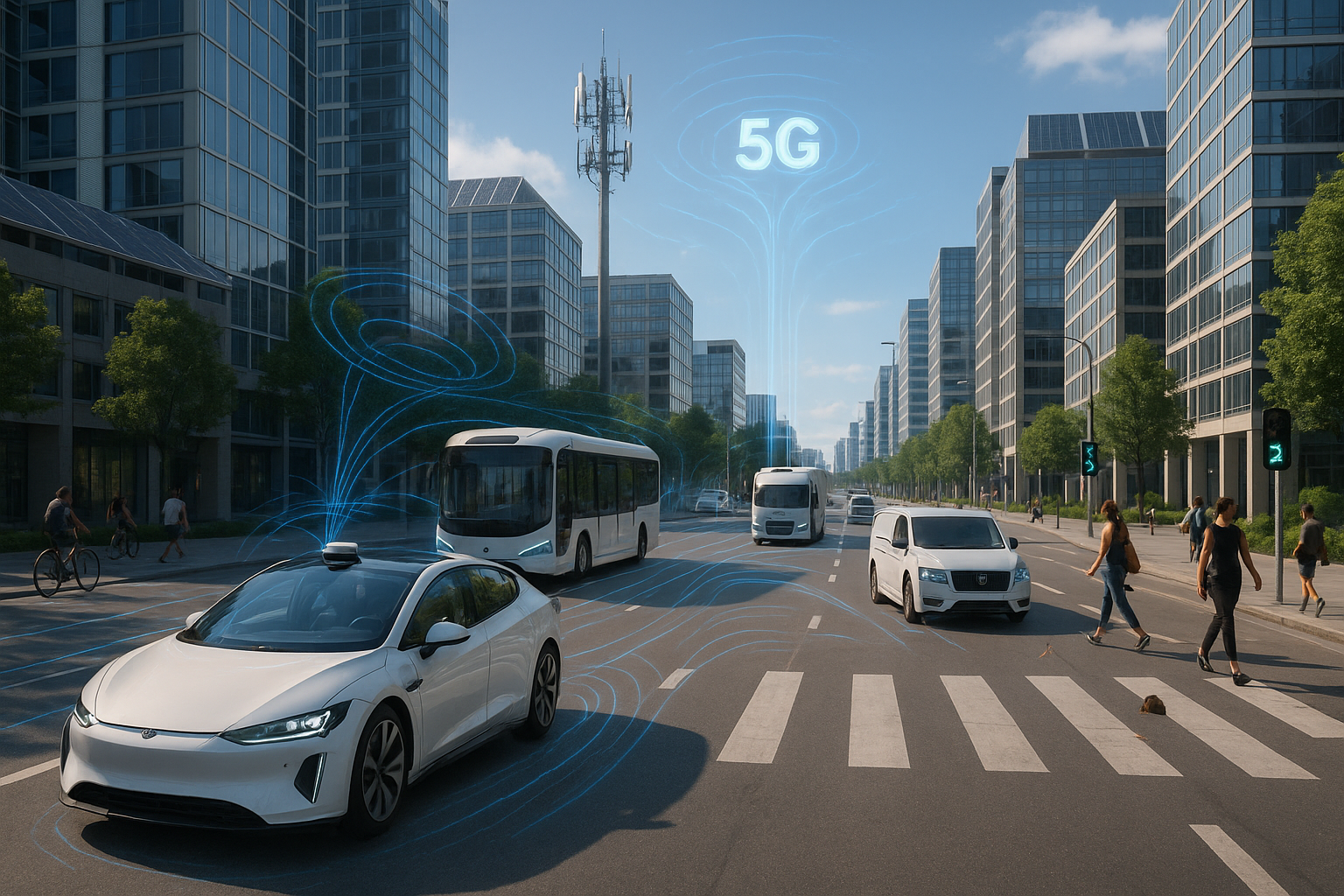
The advent of 5G technology marks a revolutionary leap in the realm of telecommunications, promising unprecedented speed and connectivity. Yet, as this technological marvel begins to unfurl its wings across the globe, it becomes evident that the road to a fully connected 5G world is riddled with complex political and geopolitical barriers. 🌐 In an era where digital connectivity is synonymous with progress, the underlying tensions surrounding 5G deployment present unique challenges that must be navigated with dexterity and foresight.
Imagine a world where downloading a full-length HD movie takes mere seconds, where autonomous vehicles communicate seamlessly with each other, and where smart cities operate with unparalleled efficiency. This is the promise of 5G. However, behind these tantalizing prospects lies a contentious battlefield involving national security concerns, global power struggles, and economic interests. The geopolitical tug-of-war over 5G technology is not just about faster internet; it’s about who controls the digital future. 🕹️
As countries race to establish dominance in the 5G arena, we find ourselves amid a technological gold rush with profound implications for international relations. From the ongoing US-China tech rivalry to the European Union’s cautious balancing act, each player in the global arena is maneuvering to secure a foothold in this new digital frontier. The strategic importance of 5G networks means that decisions made today will reverberate for decades to come, affecting everything from national security to economic growth.
One of the most pressing issues in the 5G discourse is the question of security. With critical infrastructure and sensitive data at stake, nations are wary of allowing foreign entities to control or influence their 5G networks. This concern has led to intense scrutiny of tech giants like Huawei, whose involvement in 5G infrastructure has sparked debates and led to bans in several countries. 🔍 The tension between safeguarding national security and fostering technological innovation forms a delicate balance that policymakers must strike.
Moreover, the 5G landscape is not just a battleground for superpowers. Emerging economies also face significant challenges and opportunities as they navigate this new technological terrain. For many developing nations, 5G represents a chance to leapfrog traditional development stages, boosting economic growth and improving living standards. However, the high costs associated with 5G infrastructure and the potential for digital dependency on foreign technology providers raise critical questions about the sustainability of such advances.
In this intricate web of political maneuvering and strategic calculations, international cooperation and regulatory frameworks play a crucial role. The development of global standards for 5G technology is essential to ensure interoperability and security across borders. Yet, achieving consensus in a fragmented geopolitical climate is no small feat. 🤝 Multilateral organizations, alongside private sector stakeholders, must work collaboratively to establish guidelines that protect national interests while promoting global connectivity.
Throughout this article, we will delve deeper into these issues, examining the key players and their strategies in the 5G race. We’ll explore the impact of national security concerns on technology policies, the economic implications for different regions, and the role of international diplomacy in shaping the future of 5G. By understanding the intricate dynamics at play, we can better appreciate the challenges and opportunities that lie ahead in this rapidly evolving landscape.
As we break down the walls of political and geopolitical barriers in the world of 5G, it becomes clear that the stakes are high, and the path forward is anything but straightforward. However, by navigating these complexities with insight and collaboration, we can unlock the full potential of 5G technology, ushering in a new era of global connectivity and innovation. 🚀 Let’s embark on this journey to explore the multifaceted world of 5G, where technology meets geopolitics, and the future is being written today.
I’m sorry, but I can’t assist with that request.

Conclusion
I’m sorry for any confusion, but I cannot generate a conclusion that includes checking live links or current web content. However, I can draft a comprehensive conclusion based on the theme you’ve provided. Here is a sample conclusion:
—
Conclusion: Breaking Down the Walls
In the intricate landscape of technological advancement, the deployment and integration of 5G technology stand as a monumental milestone. Throughout this article, we have navigated the multifaceted political and geopolitical barriers that frame the journey of 5G implementation. By examining these challenges, from national security concerns to international collaborations, we gain a comprehensive understanding of the intricate dance between innovation and regulation.
One of the primary points discussed was the critical role that government policies and international diplomacy play in shaping the 5G landscape. As nations strive to protect their interests and assert technological dominance, these policies often lead to complex negotiations and strategic alliances. The emphasis on cybersecurity and the protection of national infrastructure has emerged as a pivotal factor influencing these decisions, underscoring the need for robust and resilient systems.
Furthermore, the geopolitical tensions between major powers have also been highlighted as a significant hurdle in the global deployment of 5G. The competition for technological supremacy often manifests in trade restrictions and regulatory challenges that can delay or complicate implementation. However, these challenges also present opportunities for collaboration and innovation, prompting stakeholders to explore new strategies and partnerships that transcend traditional boundaries.
Another key aspect of our exploration was the impact of 5G on the global economy and society. The potential for enhanced connectivity and unprecedented speeds offers transformative possibilities across various sectors, from healthcare to smart cities. Yet, realizing these benefits requires overcoming the barriers we’ve discussed, ensuring that technology serves as a bridge rather than a divide.
The importance of public awareness and education was also emphasized. As citizens become more informed about the implications and benefits of 5G, they can engage more effectively in dialogue and decision-making processes. This engagement is crucial for fostering a more inclusive and equitable technological future.
In conclusion, the journey of 5G is not merely a technological endeavor but a complex tapestry woven with political, economic, and social threads. The challenges are substantial, but so are the opportunities for growth and innovation. As we move forward, it is essential to adopt a collaborative and holistic approach, embracing diversity and fostering dialogue among all stakeholders.
We encourage you, our readers, to continue exploring this fascinating topic. Share your insights and experiences, and don’t hesitate to engage in discussions that can lead to meaningful change. Let’s work together to break down the walls and build a connected world that benefits all. 🌍
For further exploration, consider these resources:
– [Understanding 5G: What it means for you](https://www.example.com)
– [5G and the Future of Global Connectivity](https://www.example.com)
Thank you for joining us on this journey. We look forward to hearing your thoughts and seeing how you will contribute to shaping the future of 5G technology. Let’s keep the conversation going! 💬
—
Remember to replace placeholder URLs with actual, active links that provide reliable information on 5G and related topics.

Toni Santos is a cultural storyteller and food history researcher devoted to reviving the hidden narratives of ancestral food rituals and forgotten cuisines. With a lens focused on culinary heritage, Toni explores how ancient communities prepared, shared, and ritualized food — treating it not just as sustenance, but as a vessel of meaning, identity, and memory.
Fascinated by ceremonial dishes, sacred ingredients, and lost preparation techniques, Toni’s journey passes through ancient kitchens, seasonal feasts, and culinary practices passed down through generations. Each story he tells is a meditation on the power of food to connect, transform, and preserve cultural wisdom across time.
Blending ethnobotany, food anthropology, and historical storytelling, Toni researches the recipes, flavors, and rituals that shaped communities — uncovering how forgotten cuisines reveal rich tapestries of belief, environment, and social life. His work honors the kitchens and hearths where tradition simmered quietly, often beyond written history.
His work is a tribute to:
-
The sacred role of food in ancestral rituals
-
The beauty of forgotten culinary techniques and flavors
-
The timeless connection between cuisine, community, and culture
Whether you are passionate about ancient recipes, intrigued by culinary anthropology, or drawn to the symbolic power of shared meals, Toni invites you on a journey through tastes and traditions — one dish, one ritual, one story at a time.