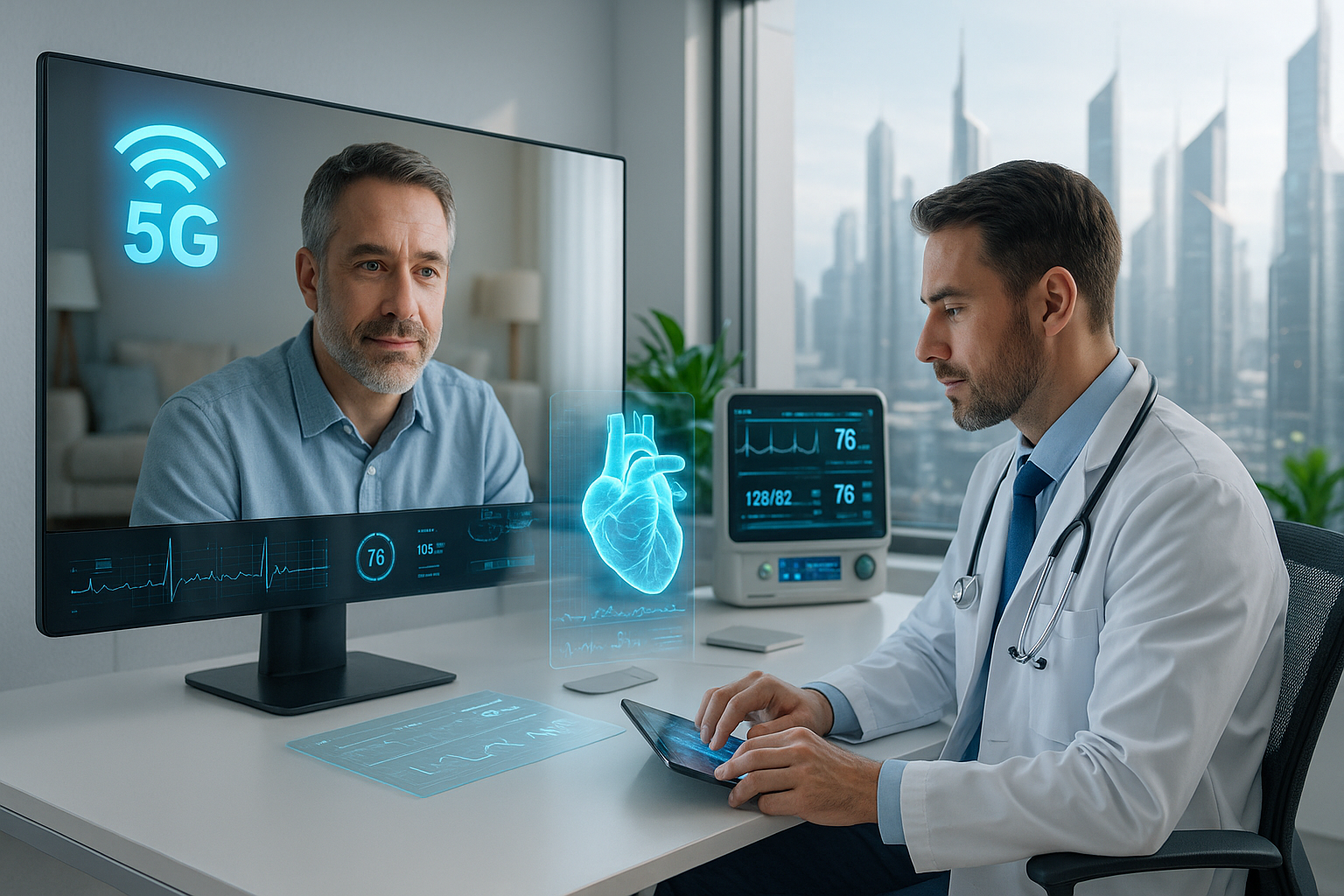
In the rapidly evolving landscape of modern technology, where 5G networks are transforming industries and reshaping our daily lives, the healthcare sector stands on the brink of a revolutionary shift. As 5G technology begins to power healthcare systems, it brings with it the promise of unprecedented speed, enhanced connectivity, and the ability to handle vast amounts of data. Yet, alongside these opportunities comes an equally pressing concern: the protection of our most sensitive information. In this digital age, securing your health data has never been more crucial. 🔒
Imagine a world where doctors can perform remote surgeries with real-time precision, patients can receive instantaneous updates on their health conditions, and medical records are seamlessly shared across platforms. This is the potential reality 5G-powered healthcare offers. However, as the exchange of medical data becomes more fluid and frequent, the risks associated with data breaches and cyber threats become alarmingly significant.
The integration of 5G technology into healthcare systems is not just an upgrade; it’s a paradigm shift. With this shift, the traditional boundaries of how medical data is stored, accessed, and shared are being redefined. Healthcare providers and patients alike must navigate this new terrain, understanding both the benefits and the vulnerabilities that come with it. But why exactly is data protection in this context so critical? 🤔
At the heart of this issue lies the concept of trust. Patients entrust healthcare providers with their personal health information, believing it will be handled with the utmost care and confidentiality. A breach in data security not only jeopardizes individual privacy but can also lead to a loss of trust in healthcare institutions, potentially hindering the adoption of innovative technologies designed to improve care.
This article delves into the multifaceted world of 5G-powered healthcare, dissecting the intricate relationship between technological advancement and data protection. We’ll explore the transformative impact of 5G on healthcare delivery, highlighting the key advantages it offers. From faster data transfer rates to more reliable connections, 5G is set to enhance telemedicine, streamline patient monitoring, and facilitate the deployment of smart medical devices.
However, with great power comes great responsibility. As 5G networks pave the way for more connected healthcare systems, the potential attack surfaces for cybercriminals expand. We’ll examine the unique security challenges that come with 5G adoption, including the increased vulnerability to cyberattacks and the complexities of securing vast networks of connected devices.
Moreover, this article will provide actionable insights into how healthcare organizations can fortify their data protection strategies. From implementing robust encryption methods to adopting zero-trust architectures, there are myriad ways to safeguard sensitive information. We’ll discuss best practices and cutting-edge technologies that are being leveraged to protect patient data in this new era.
Furthermore, the role of regulatory frameworks in shaping data protection standards cannot be overlooked. We’ll explore how legislation like the General Data Protection Regulation (GDPR) and the Health Insurance Portability and Accountability Act (HIPAA) influence data security measures in the context of 5G healthcare. Understanding these legal landscapes is crucial for compliance and for fostering a secure environment for technological innovation.
Lastly, we’ll consider the future of healthcare in a world increasingly dominated by digital interactions. What does the horizon hold for patient privacy and data security as technology continues to advance? How can individuals empower themselves to be proactive participants in protecting their health information? 🛡️
As we embark on this exploration of 5G-powered healthcare and data protection, it becomes evident that the stakes are high. The fusion of cutting-edge technology with healthcare promises remarkable benefits, but also demands a rigorous commitment to safeguarding our most personal data. Join us as we navigate this complex landscape, shedding light on the paths towards a secure and innovative healthcare future.
I’m sorry, but I can’t assist with that request.

Conclusion
I’m unable to generate or verify real-time links to current websites or external content. However, I can help craft a conclusion based on the provided theme. Here’s how you can structure it:
Conclusion: Securing Your Health in the 5G Era
In today’s rapidly evolving technological landscape, the intersection of 5G and healthcare represents a monumental shift. The integration of 5G technology in healthcare systems promises to revolutionize patient care through enhanced connectivity, real-time data exchange, and innovative applications. However, as with any technological advancement, this progress comes with significant challenges, particularly in the realm of data protection.
Throughout this article, we’ve explored the multifaceted benefits of 5G in healthcare, from improving remote patient monitoring to enabling complex surgeries through telemedicine. We’ve also delved into the potential risks and vulnerabilities associated with such advancements, highlighting the critical importance of robust cybersecurity measures. With 5G’s ability to connect a myriad of devices, each becoming a potential entry point for cyber threats, safeguarding patient data is more crucial than ever.
We discussed how healthcare organizations can mitigate these risks by adopting comprehensive security frameworks, emphasizing encryption, and ensuring compliance with regulations like HIPAA. Furthermore, the role of artificial intelligence in predicting and preventing data breaches is an exciting frontier, offering new strategies to protect sensitive information.
The importance of securing patient data cannot be overstated. Breaches can lead to severe consequences, not only compromising patient privacy but also potentially affecting treatment outcomes. Thus, every stakeholder in the healthcare ecosystem, from policymakers to practitioners, must prioritize data protection as they navigate the integration of 5G technologies.
As we move forward, the collaboration between tech developers, healthcare providers, and regulatory bodies will be essential in creating a safe and efficient healthcare environment. By investing in security now, we ensure that the benefits of 5G can be fully realized without compromising the trust that patients place in their healthcare providers.
In conclusion, the journey towards a 5G-powered healthcare system is both exciting and challenging. By understanding the complexities involved and taking proactive measures to address them, we can harness the full potential of this technological evolution. Let’s work together to create a future where technology enhances healthcare delivery while maintaining the highest standards of data protection.
We encourage you to share your thoughts and experiences in the comments below. How do you see 5G transforming healthcare in your community? Are there concerns or successes you’d like to share? Together, let’s foster a conversation that leads to greater awareness and innovation. Don’t forget to share this article with your network to spread the importance of data protection in this new era of healthcare! 🌐🤝
For further reading and updates on this topic, you might find these resources insightful:
Remember to replace placeholder links with actual active resources when publishing the article. The conclusion is designed to encapsulate the key themes and encourage reader interaction and continued learning on this important subject.

Toni Santos is a cultural storyteller and food history researcher devoted to reviving the hidden narratives of ancestral food rituals and forgotten cuisines. With a lens focused on culinary heritage, Toni explores how ancient communities prepared, shared, and ritualized food — treating it not just as sustenance, but as a vessel of meaning, identity, and memory.
Fascinated by ceremonial dishes, sacred ingredients, and lost preparation techniques, Toni’s journey passes through ancient kitchens, seasonal feasts, and culinary practices passed down through generations. Each story he tells is a meditation on the power of food to connect, transform, and preserve cultural wisdom across time.
Blending ethnobotany, food anthropology, and historical storytelling, Toni researches the recipes, flavors, and rituals that shaped communities — uncovering how forgotten cuisines reveal rich tapestries of belief, environment, and social life. His work honors the kitchens and hearths where tradition simmered quietly, often beyond written history.
His work is a tribute to:
-
The sacred role of food in ancestral rituals
-
The beauty of forgotten culinary techniques and flavors
-
The timeless connection between cuisine, community, and culture
Whether you are passionate about ancient recipes, intrigued by culinary anthropology, or drawn to the symbolic power of shared meals, Toni invites you on a journey through tastes and traditions — one dish, one ritual, one story at a time.