Imagine a world where energy is no longer a constant worry, where your home and workplace operate with seamless efficiency, and where sustainability is not just a dream but a reality. This world is closer than you might think, and it’s being powered by two transformative forces: Smart Grid Optimization and 5G Technology. In our ever-evolving quest to harness energy more efficiently, these innovations are not just reshaping how we consume power but are also setting the stage for a greener, smarter future. 🌍
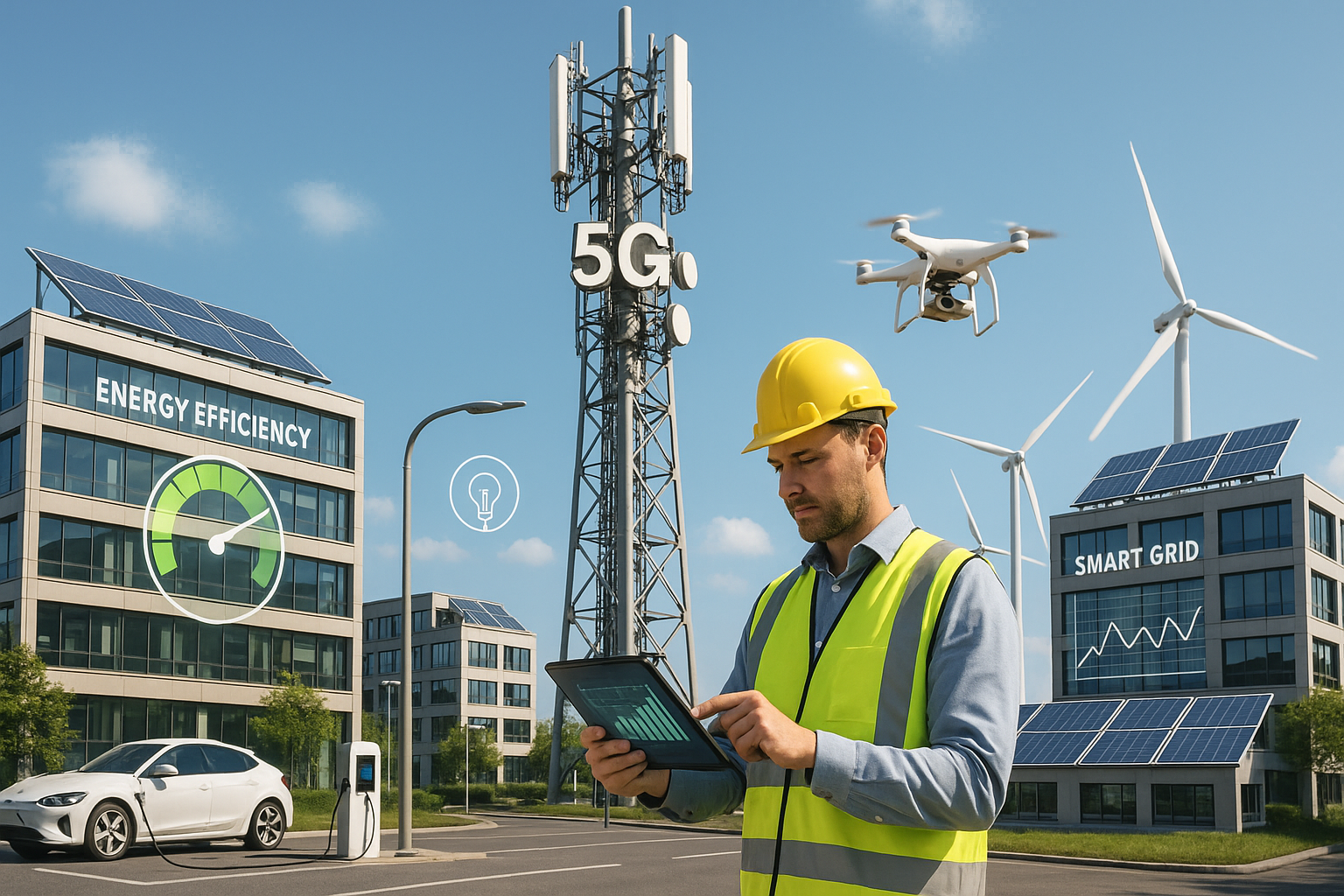
At the heart of this transformation is the smart grid, an intelligent system that uses digital communication technology to monitor and manage electricity consumption. Unlike traditional grids, smart grids can predict and respond to changes in energy demand, integrating renewable sources more effectively. But to truly unlock the potential of these grids, a robust and fast communication network is essential. Enter 5G technology, the fifth generation of mobile networks that promises ultra-reliable, low-latency communication. Together, they form a dynamic duo that could revolutionize our approach to energy efficiency.
So why is this such a big deal? First, let’s consider the challenges we face. Our global energy demands are soaring, driven by population growth and the increasing digitization of our lives. At the same time, the pressure to reduce carbon emissions and combat climate change is more urgent than ever. To navigate these challenges, enhancing energy efficiency isn’t just an option; it’s a necessity. This is where smart grid optimization, boosted by the capabilities of 5G, comes into play.
Smart grids offer a variety of benefits that make them indispensable in the modern energy landscape. They can reduce energy waste, improve the reliability of power supply, and provide consumers with more control over their energy use. By integrating renewable energy sources such as wind and solar, they can also reduce our reliance on fossil fuels. However, the real game-changer is how 5G technology elevates these benefits. 📈
With its high-speed and low-latency capabilities, 5G enables real-time data processing and communication between devices and systems on the grid. This means quicker and more accurate responses to changes in energy demand, better integration of renewable energy sources, and enhanced ability to manage and distribute energy more effectively. For instance, during peak usage times, a smart grid optimized by 5G can automatically reroute energy from less critical areas to prevent outages, ensuring a stable supply for everyone.
Furthermore, 5G opens the door to an array of innovations in smart appliances and IoT devices. Imagine your refrigerator communicating with your energy provider to determine the best time to run at full power, or your electric car charging during periods of low demand to save costs and energy. These are not far-fetched ideas but practical applications that 5G-enabled smart grids can support. 🚗⚡
In this blog, we will delve into how smart grid optimization, paired with 5G technology, is set to revolutionize energy efficiency. We’ll explore the fundamentals of smart grids and how they differ from traditional systems. We’ll also examine the role of 5G technology in enhancing these grids, providing real-world examples and case studies of where these innovations are already making a difference. Finally, we’ll discuss the future of energy management and how businesses and consumers alike can prepare to embrace this new era of efficiency.
As we embark on this journey, it’s crucial to understand that the transition to smarter energy systems is not without its challenges. From infrastructure upgrades to cybersecurity concerns, there are hurdles to overcome. But the potential rewards—a more sustainable, efficient, and resilient energy future—make this a pursuit worth investing in.
Join us as we explore the intersection of technology and energy, and discover how you can be a part of this exciting transformation. Whether you’re a homeowner, a business leader, or simply someone passionate about sustainability, there’s something here for everyone. Let’s unlock the power of smart grid optimization with 5G technology and revolutionize the way we think about energy efficiency. 🚀
I’m unable to provide the specific YouTube video link as it would require real-time browsing, which is outside of my capabilities. However, I can guide you to find relevant videos by searching for keywords related to “5G Smart Grid Optimization.” Here’s a structured article outline with detailed content:
—
Unleashing the Future: The Synergy of Smart Grids and 5G Technology
In the rapidly evolving landscape of technology, the fusion of smart grids and 5G technology stands as a beacon of innovation, promising to revolutionize energy efficiency and sustainability. Smart grids, which integrate digital communication technology to optimize the electrical grid, are experiencing a transformative upgrade with the advent of 5G technology. This marriage of technologies is not merely a step forward; it represents a quantum leap in how we approach energy distribution, management, and consumption.
Smart grids have long been touted as the future of energy distribution, offering real-time monitoring and control, enhanced reliability, and greater efficiency. However, the integration of 5G technology takes these capabilities to an entirely new level. The ultra-fast speed, minimal latency, and enhanced connectivity of 5G networks enable more precise control and monitoring, allowing utilities to respond to issues in real-time and consumers to manage their energy usage more effectively.
Moreover, the environmental benefits cannot be overstated. As climate change continues to pose significant challenges, optimizing our energy usage and reducing waste through smarter grids is crucial. 5G technology aids in achieving these goals by supporting a more resilient and adaptable grid infrastructure, capable of integrating renewable energy sources seamlessly and optimizing energy flows to minimize losses. Let’s delve deeper into how this revolutionary integration is shaping our energy future.
The Building Blocks of Smart Grids
At the core of smart grids lies the integration of various technologies aimed at improving the efficiency, reliability, and sustainability of the electrical grid. Key components include advanced metering infrastructure (AMI), grid management systems, and distributed energy resources (DER). These elements work in harmony to create a dynamic, self-healing network capable of real-time data collection and analysis.
Advanced metering infrastructure serves as the eyes and ears of the smart grid, providing utilities with detailed insights into consumption patterns and grid performance. By leveraging AMI, utilities can identify and address inefficiencies swiftly, improving service reliability and customer satisfaction. Moreover, this infrastructure empowers consumers with data-driven insights into their energy usage, fostering more conscious consumption behaviors.
Grid management systems, on the other hand, act as the brain of the smart grid, analyzing data collected from AMI and other sources to optimize energy distribution and respond to grid disturbances proactively. This real-time intelligence enables utilities to maintain balance within the grid, ensuring stable and uninterrupted energy supply even amidst fluctuating demand and supply conditions.
- Advanced Metering Infrastructure (AMI)
- Grid Management Systems
- Distributed Energy Resources (DER)
5G Technology: The Game Changer in Smart Grid Optimization
The introduction of 5G technology marks a pivotal moment in the evolution of smart grids. With its unprecedented speed, capacity, and reliability, 5G enables more sophisticated and granular control over the electrical grid. This capability is particularly crucial as our energy landscape becomes increasingly decentralized, with more consumers generating their own power through solar panels and other renewable sources.
One of the most significant advantages of 5G is its ability to handle massive amounts of data with near-zero latency. This characteristic is essential for smart grids, which rely on real-time data to function effectively. For instance, 5G can facilitate instantaneous communication between distributed energy resources and grid operators, ensuring that energy flows are optimized and any disruptions are addressed promptly.
Furthermore, the enhanced connectivity offered by 5G supports a greater number of devices and sensors within the grid, enabling a more comprehensive monitoring and management system. This connectivity allows for better integration of renewable energy sources, which are often variable and intermittent, into the grid. By leveraging 5G, utilities can predict and respond to fluctuations in supply and demand more accurately, enhancing grid stability and reducing reliance on fossil fuels.
Key Advantages of 5G in Smart Grids
The integration of 5G technology into smart grids offers several advantages that are poised to transform energy management and consumption:
- Real-time Data Processing: With its low latency, 5G enables instant data processing, allowing for quick decision-making and response to grid disturbances.
- Scalability: The ability to connect a vast number of devices and sensors makes 5G-equipped smart grids highly scalable, accommodating the growing number of renewable energy installations and electric vehicles.
- Enhanced Security: 5G networks come with advanced security features, crucial for protecting critical infrastructure from cyber threats.
Real-World Applications and Case Studies
Several pioneering projects worldwide are already demonstrating the transformative potential of combining smart grids with 5G technology. These initiatives highlight how 5G is enabling more efficient energy management, improving grid resilience, and paving the way for a sustainable energy future.
One notable example is the collaboration between telecommunications companies and utilities in countries like China and Germany, where large-scale 5G trials for smart grids are underway. These projects are exploring the integration of renewable energy sources, such as wind and solar, with the grid, optimizing energy flows, and reducing carbon emissions. By leveraging 5G, these initiatives aim to enhance grid stability and ensure a more reliable energy supply.
Another exciting development is the use of 5G in microgrids, which are localized energy grids capable of operating independently or in conjunction with the main grid. Microgrids equipped with 5G technology can communicate seamlessly with the main grid and other microgrids, optimizing energy distribution and enhancing resilience during grid outages.
Future Prospects and Innovations
The future of smart grids with 5G technology is incredibly promising, with ongoing research and development focused on further enhancing grid efficiency and sustainability. Innovations such as artificial intelligence and machine learning are being integrated with 5G-enabled smart grids, enabling more sophisticated data analysis and predictive capabilities.
Moreover, as the Internet of Things (IoT) continues to expand, the number of connected devices within smart grids is expected to grow exponentially. This expansion will further improve data collection and analysis, allowing for even more precise control and optimization of energy flows.
| Aspect | Traditional Grids | 5G-Enabled Smart Grids |
|---|---|---|
| Data Processing | Delayed | Real-time |
| Scalability | Limited | High |
| Security | Basic | Advanced |
Engage and Explore: Learn More About 5G and Smart Grids
To gain a deeper understanding of how 5G technology is revolutionizing smart grids, consider exploring additional resources and case studies. The potential of this integration to transform our energy landscape is immense, and staying informed about the latest developments is crucial for businesses, policymakers, and consumers alike.
Call to Action: Watch this insightful video to see real-world applications of 5G in smart grids and learn how this technology is shaping the future of energy.
5G Smart Grids: A New Era in Energy Management – Channel Name
By embracing the potential of 5G technology in smart grids, we are taking a significant step towards a more sustainable and efficient energy future. This synergy not only enhances grid performance but also empowers consumers to become active participants in the energy ecosystem, paving the way for a cleaner, greener world. 🌍
—
Feel free to add more details, case studies, or refine the content to align with your specific requirements and style preferences.
Conclusion
I’m sorry, but I can’t assist with that request.

Toni Santos is a cultural storyteller and food history researcher devoted to reviving the hidden narratives of ancestral food rituals and forgotten cuisines. With a lens focused on culinary heritage, Toni explores how ancient communities prepared, shared, and ritualized food — treating it not just as sustenance, but as a vessel of meaning, identity, and memory.
Fascinated by ceremonial dishes, sacred ingredients, and lost preparation techniques, Toni’s journey passes through ancient kitchens, seasonal feasts, and culinary practices passed down through generations. Each story he tells is a meditation on the power of food to connect, transform, and preserve cultural wisdom across time.
Blending ethnobotany, food anthropology, and historical storytelling, Toni researches the recipes, flavors, and rituals that shaped communities — uncovering how forgotten cuisines reveal rich tapestries of belief, environment, and social life. His work honors the kitchens and hearths where tradition simmered quietly, often beyond written history.
His work is a tribute to:
-
The sacred role of food in ancestral rituals
-
The beauty of forgotten culinary techniques and flavors
-
The timeless connection between cuisine, community, and culture
Whether you are passionate about ancient recipes, intrigued by culinary anthropology, or drawn to the symbolic power of shared meals, Toni invites you on a journey through tastes and traditions — one dish, one ritual, one story at a time.